| |
| Thursday, 29 October 2026 |
| Now You See It Now You Don't
- the Art of Visual Deception. |
| Bertie Pearce |
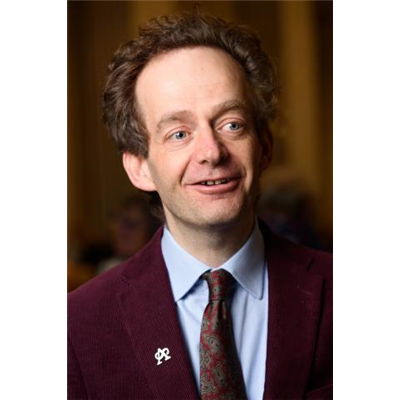 |
This is one of the quirkiest lectures you will ever hear. There is a universal delight in being deceived and in this lecture Bertie Pearce takes his audience on a whistle stop tour of art which fools, surprises and amuses the viewer. Beginning and ending with the Belgian surrealist, René Magritte, it encompasses Trompe L’eoil, Banksy, Bridget Riley, Arcimboldo and Escher to name a few. Hold on to your seats and get ready to be visually fried.
This lecture will be given by Bertie Pearce. He has a BA (Hons) in Drama from Manchester University, and a Diploma Internationale from the École Internationale du Théatre, Jacques Lecoq. A member of the Inner Magic Circle, with Gold Star. His past experience includes lecturing and performing on cruise ships, and to U3A, historical societies, festivals, schools and colleges. In addition, he has toured the world with a magic cabaret show and a one man show entitled All Aboard. Bertie has written articles for newspapers and magazines on entertainment and theatre. |
|
| Thursday, 26 November 2026 |
| Harp and Holly. It's History design and music - with a seasonal flavour. |
| Margaret Watson |
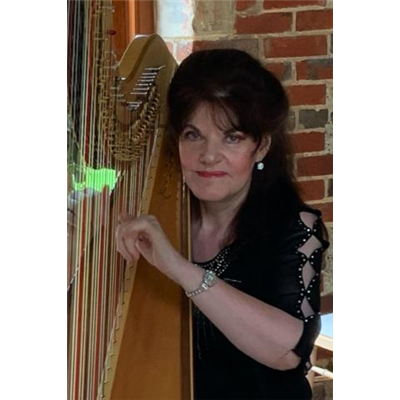 |
Join Margaret for a seasonal hour of Christmas bygones and entertainment as she brings to life the joy of music through the ages at this time of year. She will be delving into the history of the harp and it’s incredible pedal mechanism and exploring some of the old Christmas Carols and their origins. Margaret will play a selection of festive favourites to get you in the mood for Christmas.
Margaret Watson studied harp under the late Sidonie Goossens OBE and Sussex harpist Helen Arnold. She holds a Diploma in Music Performance on the harp and is also a Fellow of The Guild of Musicians and Singers. Now one of the busiest harpists in the Southeast, Margaret has played for Royalty, given concerts at National Trust properties, played at City Guildhall, Clarence House, The Garrick Club, The Savoy, Ritz, Dorchester and Hilton Langham Hotels in London, Glyndebourne Opera House, Covent Garden and for many weddings, private parties, group meetings, receptions, launches, corporate, civic and charity functions. This lecture will be preceeded by the AGM
and followed by the Winter Lunch |
|
| Thursday, 28 January 2027 |
| Thomas Gainsborough: A Life. Surprising Resemblance and Perfection. |
| Matthew Morgan |
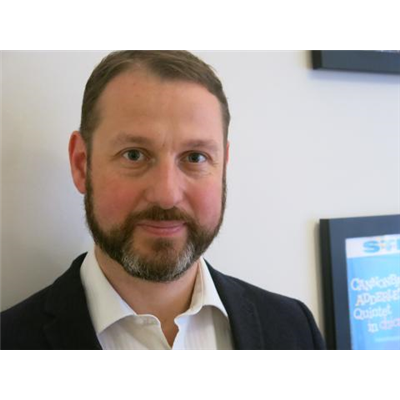 |
2027 will be the 300th anniversary of the birth of Thomas Gainsborough. Gainsborough was unquestionably one of the greatest portrait painters that Britain has ever produced. His ability to capture the inner lives of his sitters, his dramatic use of paint and his remarkable approach to colour set him apart from almost all of his contemporaries. Yet, although he was regarded in his lifetime as one of the preeminent portrait painters of his day, the genre that he truly loved was landscape. In this lecture we will look at the life and work of this unique artist, his experimental technique and his fraught relationship to portraiture, the genre in which he excelled. The lecture will be presented by Matthew Morgan who is an independent art historian, educator, and museum professional with a passion for sharing the joy of art. Over the years,he has spoken on subjects ranging from Caravaggio to Kehinde Wiley. Matthew has lectured widely across Britain and Europe, in settings as diverse as universities, festivals and cathedrals as well as Galleries such as the National Gallery, the Royal Collection, the Wallace Collection, the Courtauld Institute and the Victoria and Albert Museum. |
|
| Thursday, 25 February 2027 |
| Love letter to Antarctica: Edward and Oriana Wilson’s legacy. |
| Katherine MacInnes |
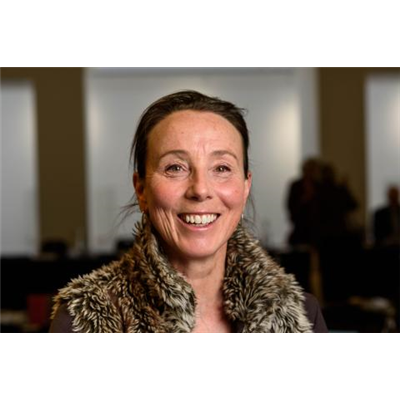 |
This lecture explores the life and legacy of Edward Adrian Wilson, the esteemed British physician, naturalist, and artist, best known as Captain Robert Falcon Scott’s trusted companion during the ill-fated Terra Nova Expedition to Antarctica (1910–1913). Wilson’s profound passion for the Antarctic wilderness is, as he expressed it, 'a prayer'. His delicate and evocative watercolour paintings remain some of the earliest and most artistic visual records of this remote and hostile environment. Katherine MacInnes, the lecturer, first started researching polar history when her husband climbed Everest in 2006 and her children were 10 months, 3 and 5. She looked to history and found inspiration from the invisible women – mothers, wives, widows – throughout exploration’s history. From all this research, she wrote Snow Widows – Scott’s Fatal Antarctic Expedition Through the Eyes of the Women They Left Behind (HarperCollins 2022) and Woman with the Iceberg Eyes: Oriana F. Wilson (History Press 2019). Katherine has been shortlisted for the Biographer’s Prize and is a sought after public speaker on polar history around the globe, from Norway to the Royal Geographical Society. |
|
| Thursday, 25 March 2027 |
| The Imperial Eggs of Carl Faberge before the Revolution |
| Toby Faber |
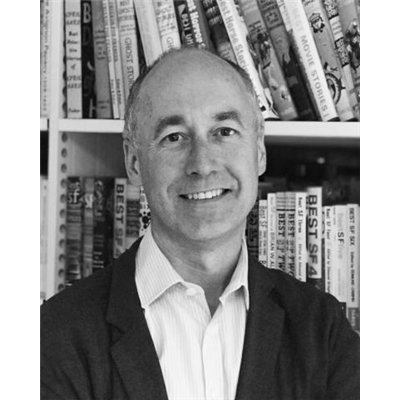 |
Toby Faber tells the story of the making of the Fabergé Imperial Easter Eggs: both the artistry and creativity that they embody, and how their designs link to the history of the last two Romanov Tsars. Between 1885 and 1916, Carl Fabergé made fifty jewelled eggs – Easter presents from Russia’s last two emperors to their wives. They have become the most famous surviving symbols of the Romanov Empire: both supreme examples of the jeweller’s art and the vulgar playthings of a decadent court. Given almost total artistic freedom, Fabergé and his designers had to conform to only three rules: that each year’s Easter present should be egg-shaped, that it should contain some surprise to amuse or delight its recipient, and that it should be different from any predecessor. The result was a series of creations demonstrating ingenuity and creativity for which there are few parallels in any other field. The lecture is illustrated with pictures of the Romanovs and their palaces, and, of course, with photographs of the eggs themselves. Toby is an experienced lecturer and public speaker who has been accredited by The Arts Society since 2012. He has spent five years as managing director of the publishing company founded by his grandfather, Faber and Faber, where he remains on the board. He is also non-executive Chairman of its sister company, Faber Music and a director of Liverpool University Press. Toby has written three narrative histories: Stradivarius – Five Violins, One Cello and a Genius; Faberge’s Eggs; and Faber & Faber – The Untold Story, as well as a novel, Close to the Edge. Of these, only the obvious one is published by the family firm. |
|
| Thursday, 29 April 2027 |
| The Architecture of Optimism: Building Health and Happiness between the wars |
| Tessa Boase |
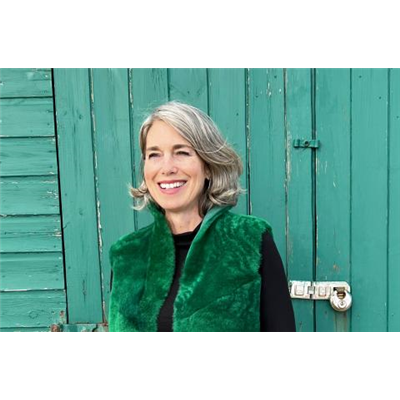 |
Lidos and libraries, concert halls and cottage estates: the inter-war era was a time of bold and urgent experiments in social engineering through architecture. Against a backdrop of the Great Depression, ‘moral uplift’ and ‘optimism’ became the buzzwords of the day. What if civic architecture could change the lives of the people? How could the puny ‘C3’ Brits be transformed into an A1 nation? What could we learn from our European neighbours (including, whisper it, the Germans)? Taking us through these years between the World Wars is Tessa Boase who is a freelance journalist, author, lecturer and campaigner with a particular interest in uncovering the stories of invisible women from the 19th and early 20th-centuries – revealing how they drove industry, propped up society and influenced politics. She’s the author of three books of social history: The Housekeeper’s Tale, Etta Lemon: The Woman Who Saved the Birds, and London’s Lost Department Stores: A Vanished World of Dazzle and Dreams. |
|
| Thursday, 27 May 2027 |
| Tinker, Tailor, Artist Spy. Sir Peter Paul Rubens as diplomat and agent |
| Matthew Wilson |
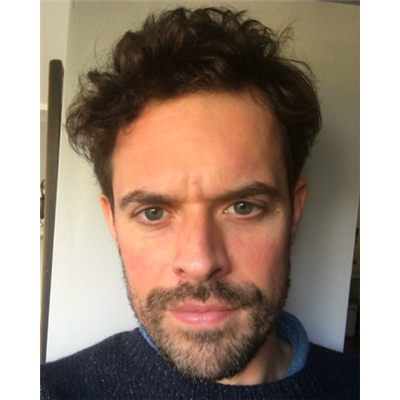 |
Few gallery-goers are aware that Rubens was not only the most influential artist of his period, but also a high-ranking diplomat and informal spy. During his glamorous and prestigious career, Rubens travelled throughout Europe and was esteemed by the mightiest kings and queens of the age. He was intelligent, good-looking and could speak several languages. His career as an artist was an excellent cover for international travel and private meetings. So, acting on behalf of the Governors of the Spanish Netherlands, Rubens had covert summits with Europe’s most significant power brokers like Marie de’Medici of France, King Philip IV of Spain, and King Charles I of England. Secret symbols, Nazi-fighting, cultural love affairs, the ‘nude’, snowmen, and artistic espionage are among the diverse interests of art historian Matthew Wilson who will be delivering this lecture. Matthew studied History of Art at the Courtauld Institute and is an author, lecturer, and educator. As a freelance journalist he writes for numerous publications including BBC Culture, The Spectator, The Economist and Aesthetica Magazine. He has written two books on symbolism – ‘Symbols in Art’ (Thames & Hudson, 2020) and ‘The Hidden Language of Symbols’ (Thames & Hudson 2022) and his latest book is 'Art Unpacked' - a fully illustrated introduction to understanding art (Thames & Hudson 2023). |
|
| Thursday, 24 June 2027 |
| Whose Shakespeare is it anyway? How his plays have come down to us. |
| Nick Hutchison |
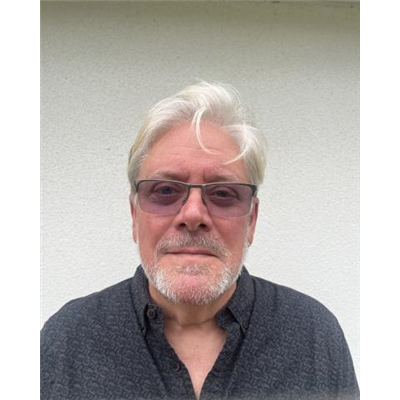 |
When we talk about a Shakespeare play what do we actually mean? How have these plays come down to us across the centuries, and how faithful are modern editions to the originals? This interactive, entertaining and enlightening lecture (developed with Sir Jonathan Bate, the distinguished Shakespearean scholar,) discusses how we approach a Shakespearean text, where it comes from, and how modern editors reedit them, frequently mistakenly. Who better to discuss this is Nick Hutchison, a theatre director, actor and lecturer. He has directed at Shakespeare’s Globe, the Sam Wanamaker Theatre, Wilton’s Music Hall, St James’s Theatre, Cheltenham Everyman, the Aldeburgh Jubilee Hall, Folger Theatre in DC, Tmu- na Theatre in Tel Aviv, the McCoy Theater in Memphis and the American Shakespeare Center in Virginia. He is an Associate Drama Tutor at RADA, LAMDA and Shakespeare’s Globe, and has directed, lectured, and taught for the Royal Conservatoire of Scotland, the Dublin Lir Academy, BADA, Mountview, Rhodes College, Syracuse, Notre Dame, Case Western Reserve University and the NYU. He lectures worldwide on Shakespeare, is a regular contributor to the National Symposium on Classical Education in Phoenix, Arizona, he had a paper published in Shakespeare Bulletin in 2014, and contributed to How and Why We Teach Shakespeare (Routledge) and Why The Theatre? ( Routledge). He is the recipient of the 2026 Burbage Award. |
|
| Thursday, 30 September 2027 |
| The Silver Thread: Silver Filigree and traditional arts in Kosovo |
| Elizabeth Gowing |
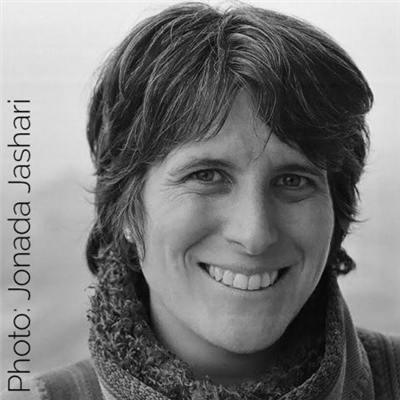 |
From the early Kosovan silver mines which are mentioned in Dante, through the twentieth century politics over Kosovo’s mines which resulted in both a war and a golf course, a silver thread winds through Kosovo’s history. Its most intricate tanglings are in the country’s cultural capital, Prizren, where a seventh generation of filigree artisans use ‘filum’ and ‘granum’, zigzags, ‘mouse-tooth’ designs and other twists and turns to magic lacy creations from dull sticks of raw material. Elizabeth Gowing will talk about the results – in boxes, buttons, jewellery, religious ornamentation and the talismans of superstitition – are a fine narrative of Kosovo’s history and traditions. Elizabeth moved to Kosovo in 2006 and there worked with the Ethnological Museum in Prishtina and co-founded ‘The Ideas Partnership’, a charity working on education and cultural heritage projects. She is the author of four books about Kosovo – Travels in Blood and Honey; becoming a beekeeper in Kosovo (2011), Edith and I; on the trail of an Edwardian traveller in Kosovo (2013); The Rubbish-Picker’s Wife; an unlikely friendship in Kosovo (2015) and The Silver Thread; a journey through Balkan craftmanship (2017). Her latest book (2022 - with Robert Wilton) is No Man's Lands: 8 extraordinary women in Balkan history. Elizabeth is a regular contributor to Radio 4 (Saturday Live, Excess Baggage, From Our Own Correspondent) and the BBC World Service. |
|
| Thursday, 28 October 2027 |
| The Art of Remembrance,
Art and design behind memorials
|
| Sophie Matthews |
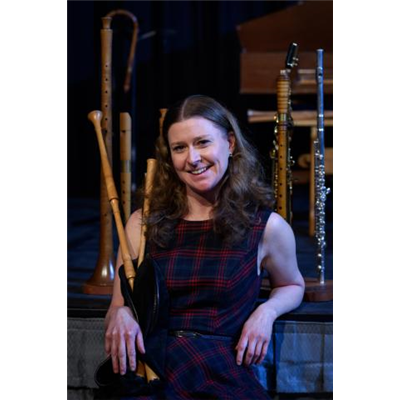 |
November 1918 saw the end of an international conflict that saw the highest casualty rate to that date. Every nation had to decide how to honour and remember its dead. This lecture explores the powerful art and design behind the memorials that mark the landscapes of the Western Front. From the solemn minimalism of Edwin Lutyens’ Thiepval Memorial to the poignant symbolism of the Menin Gate and the artistry of battlefield cemeteries, we’ll examine how architecture, sculpture, and landscape design were used to express grief, sacrifice, and national identity in the aftermath of unprecedented loss. Through archival images, design sketches, and on-site photography, the session reveals how these memorials shaped collective remembrance—and continue to speak to us over a century later. Sophie Matthews is a musician well-known for her prowess on the English border bagpipes and has become one of the foremost players of the instrument in the UK. She also plays a variety of early woodwind instruments such as shawm, rauschpfeife, crumhorm and recorder. She’s also one of a handful of British players of the baroque musette, an 18th century French bagpipe similar to the Northumbrian smallpipes. When not touring with GreenMatthews, Sophie also makes instruments (she made her own baroque oboe) and works with respected luthier Tony Millyard on his flutes. Sophie is self-taught on all of her instrument |
|
| Thursday, 25 November 2027 |
| From Tchaikovsky to Tin Pan Alley: Uplifting music for Christmas |
| Sandy Burnett |
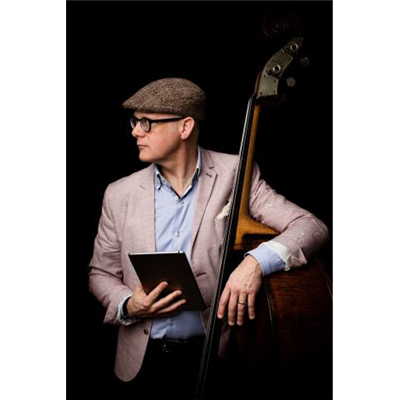 |
Celebrate the leadup to Christmas in style with some of the finest festive music from across the globe! Selections include sparking moments from Tchaikovsky’s ballet The Nutcracker, a heartwarming ballad from Mel Tormé, something from Soweto, a heavenly chorus from Johann Sebastian Bach’s Leipzig, and an illustration of the English carol tradition at its finest – all that alongside a more cynical take on the festive season from Eartha Kitt. And there’s even the chance to join together in a seasonal singalong… Bringing us this first taste of Christmas is one of the UK’s most versatile music commentators, Sandy Burnett whose career combines broadcasting, performing and lecturing. After studying at St Catharine’s College, Cambridge and working as music director for the RSC, National Theatre and in London’s West End, Sandy Burnett spent a decade as one of the core team of presenters on BBC Radio 3. Combining engaging scholarship with hands-on expertise, he devises and leads cultural holidays all over the world and was appointed the Academy of Ancient Music’s Hogwood Fellow for the 2018-19 season. He runs an online classical music appreciation Listening Club, and is the author of the Idler Guide to Classical Music. |
|